
Introduction
As women enter midlife, the conversation around health often shifts to hormones, menopause, and maintaining vitality. Hot flashes, mood swings, sleep issues, and digestive changes can become familiar challenges. While hormone replacement therapy (HRT) is one option, many women seek natural, food-based solutions to ease this transition.
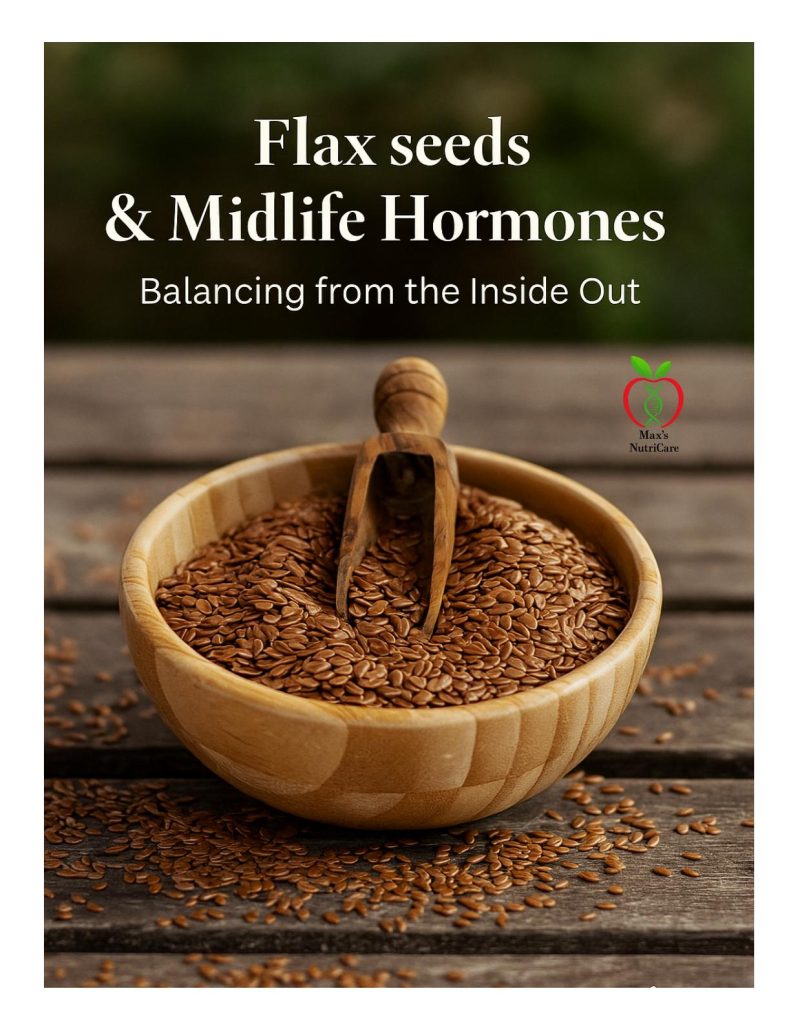
Enter flaxseeds—tiny, nutty-tasting seeds packed with nutrients that offer gentle, hormone-balancing support. Rich in lignans, omega-3 fatty acids, fiber, and antioxidants, flaxseeds are gaining attention for their ability to influence hormones and improve gut health—two systems deeply intertwined.
In this blog, we’ll explore the science behind flax seeds, their connection to hormones and gut bacteria, and how they can fit into a nourishing midlife routine.
Flaxseeds and Menopause: Nature’s Gentle Hormone Support
One of the most remarkable properties of flax seeds is their content of lignans, plant compounds that act as phytoestrogens (plant-based estrogens). These compounds have a structural similarity to estrogen and can bind to estrogen receptors in the body. This makes them especially valuable for women experiencing declining estrogen levels during perimenopause and menopause.
Research has shown that lignans may help:
- Ease hot flashes and night sweats (Trusted Source)
- Improve bone health by influencing markers of bone turnover (Trusted Source)
- Support cardiovascular wellness, which becomes increasingly important after menopause
- Reduce inflammation, often worsened during hormonal transitions
While flaxseeds are not a substitute for medical treatment, they are a gentle and food-based way to support hormonal harmony.
The Gut–Hormone Connection: How Flax seeds Nourish Your Microbiome
The gut microbiome plays a surprising role in hormone regulation. Certain gut bacteria can metabolize lignans into enterolignans, which have estrogen-like activity. A healthy gut microbiome enhances this conversion, allowing flax seeds to better support hormone balance.
Beneficial bacteria influenced by flax seeds include:
- Lactobacillus – supports digestion and enhances lignan metabolism
- Bifidobacterium – linked to improved gut lining and hormone regulation
- Ruminococcus – aids in fiber fermentation, producing short-chain fatty acids (SCFAs) that reduce inflammation
By improving gut health, flax seeds not only ease digestive issues like bloating and constipation but also support hormonal stability during midlife transitions (Trusted Source).
Nutritional Value of Flax seeds
This makes flax seeds a nutrient-dense powerhouse that supports heart health, gut health, and hormonal well-being.
Other Benefits of Flaxseeds
Beyond hormones and gut health, flaxseeds offer a wide range of science-backed benefits:
- Heart health: Their omega-3 content helps lower LDL (“bad”) cholesterol and reduce blood pressure, lowering the risk of heart disease (Trusted Source).
- Blood sugar balance: Flax seeds can slow the absorption of sugar, helping regulate blood sugar levels—especially important for women with insulin resistance or type 2 diabetes (WebMD).
- Weight management: High fiber content promotes satiety, supporting healthy weight control.
- Skin and hair health: Omega-3s and antioxidants in flax seeds may improve skin hydration and reduce inflammation-related skin conditions.
- Brain health: Flax’s ALA supports cognitive function and may lower the risk of neurodegenerative conditions (PubMed).
- Bone support: Lignans and minerals like magnesium contribute to stronger bones in postmenopausal women.
How to Use Flax seeds
To unlock their full benefits, flax seeds should be ground, as whole seeds often pass through the digestive tract undigested.
Ways to enjoy flax seeds:
- Blend into smoothies
- Sprinkle over yogurt, oats, or salads
- Bake into muffins, pancakes, or bread
- Mix into soups or stews for extra fiber
- You can replace eggs with Flax seed for a vegan option: using 3 T of water and 1-2 teaspoons of flax meal as a replacement for one egg.
Safety and Considerations
While flax seeds are generally safe, there are a few cautions:
- Start slowly: Too much fiber at once can cause bloating or discomfort.
- Hydration is key: Drink water when increasing flax intake.
- Medication interactions: Flax seeds may interfere with blood thinners, thyroid medication, or hormone-sensitive conditions—consult a healthcare provider if you’re on medication (Trusted Source).
- Pregnancy caution: Large amounts of flax seed may not be safe during pregnancy.
Conclusion
Flax seeds are more than just a trendy super food. For women navigating midlife, they offer gentle hormonal support, gut microbiome nourishment, and a cascade of other health benefits. Their combination of lignans, fiber, and omega-3s makes them a natural ally for hormone balance, gut health, and overall well-being.
Easy Flax Seed Crackers
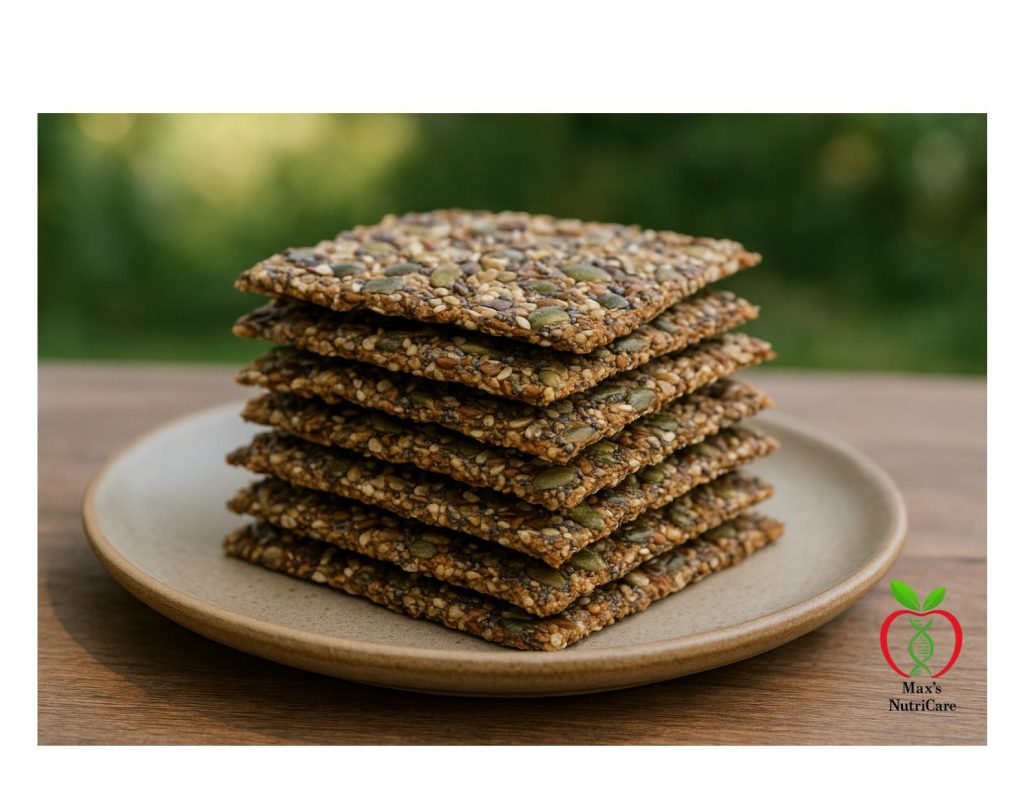
Yield: 8 servings
Prep Time: 15 minutes Cook: 30 Minutes
Ingredients:
1 Cup Flax Seed
¾ Cup pumpkin seed
¾ Cup Sunflower Seed
¼ Cup Chia Seed
¼ Cup Sesame Seed
Pinch of Salt
Spices you enjoy
Method:
- Preheat the oven to 175º C
- Put all of the ingredients to a large bowl and mix together (this is when you will add your spices that you enjoy.
- Let it sit for 10-15 minutes to allow the seeds to gel together and bind, stirring every 5 minutes or so.
- Prepare a parchment lined baking sheet and brush with about 1 tablespoon of olive oil. Evenly spread the mixture onto the sheet into a thin layer that covers the surface of the pan. Brush another tablespoon of olive oil on top of the mixture.
- Bake for 25-35 minutes (depending on how thin you spread it
- Remove from the oven and let cool completely.
- Enjoy!