
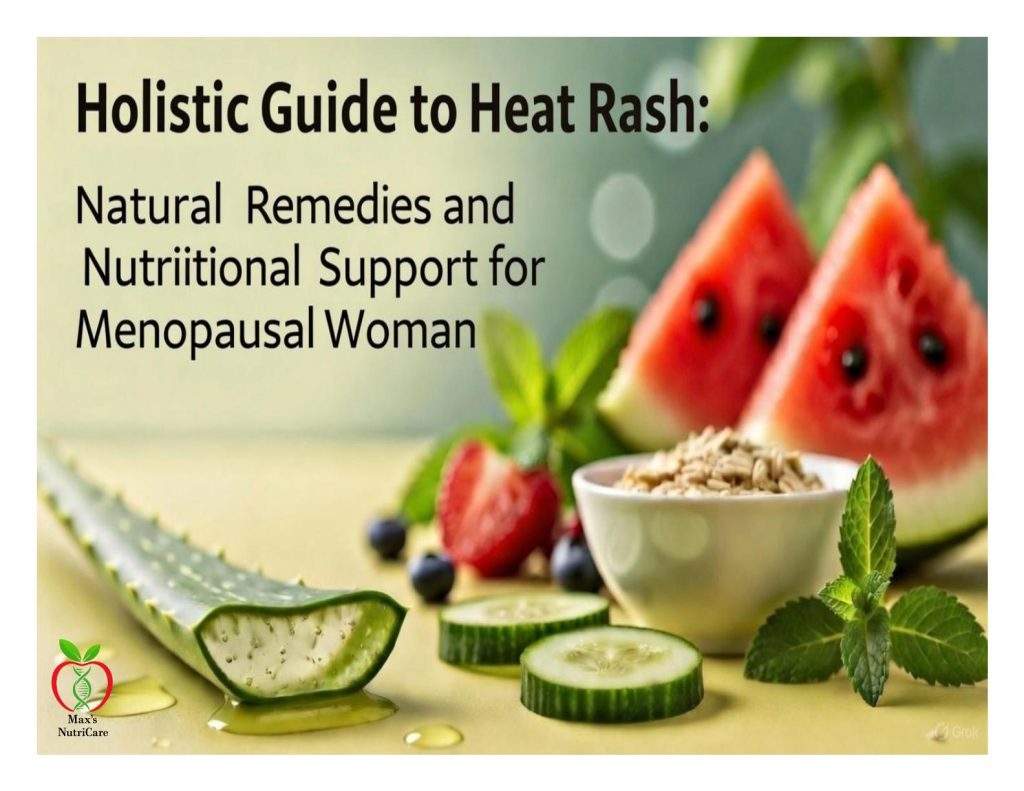
As a nutritionist and menopause coach, I’ve seen how heat rash can disrupt daily life, especially during the hormonal shifts of perimenopause and menopause. These changes often amplify sweating due to hot flashes, making women more susceptible to prickly heat or miliaria. In this blog, we’ll explore heat rash holistically—focusing on its causes, types, symptoms, and natural ways to heal. Drawing from traditional wisdom and evidence-based nutrition, I’ll emphasize food as medicine to strengthen your skin barrier and reduce inflammation. Whether you’re dealing with menopause rashes or summer irritations, these insights can help you reclaim comfort naturally. Let’s dive in.
What is Heat Rash?
Heat rash, also known as prickly heat or miliaria, is a common skin condition where sweat gets trapped under the skin, leading to inflammation and discomfort. It’s not just a summer nuisance; for menopausal women, fluctuating estrogen levels can exacerbate it by increasing sweat production and skin sensitivity. According to the Mayo Clinic, heat rash occurs when blocked sweat ducts prevent perspiration from evaporating, causing small bumps or blisters. This holistic view sees it as an imbalance of the body’s internal heat and external environment, often signaling the need for cooling and nourishing from within.
From a nutritional perspective, supporting your skin’s resilience starts with hydration and anti-inflammatory foods. Think of heat rash as your body’s way of asking for balance—addressing it naturally can prevent recurrences and promote overall well-being during menopause.
What Causes Heat Rash?
The root cause of heat rash is excessive sweating in hot, humid conditions, where sweat ducts become clogged. Tight clothing, heavy physical activity, or even fever can contribute. For women in menopause, hot flashes—a surge in body temperature due to dropping estrogen—can trigger more frequent sweating, trapping moisture and leading to rashes. Holistically, this ties into “pitta” imbalance in Ayurveda, where excess internal heat manifests on the skin.
Other factors include:
- Overuse of occlusive products: More on this below.
- Dehydration: Thickens sweat, making blockages more likely.
- Hormonal fluctuations: Menopause reduces collagen and natural oils, thinning the skin and increasing irritation.
As a coach, I advise clients to view causes as opportunities for lifestyle tweaks. Staying hydrated and choosing breathable fabrics can mitigate risks, especially during menopausal transitions.
The Three Main Types of Heat Rash
Heat rash isn’t one-size-fits-all; it varies by the depth of sweat duct blockage. Understanding these types helps tailor your holistic approach.
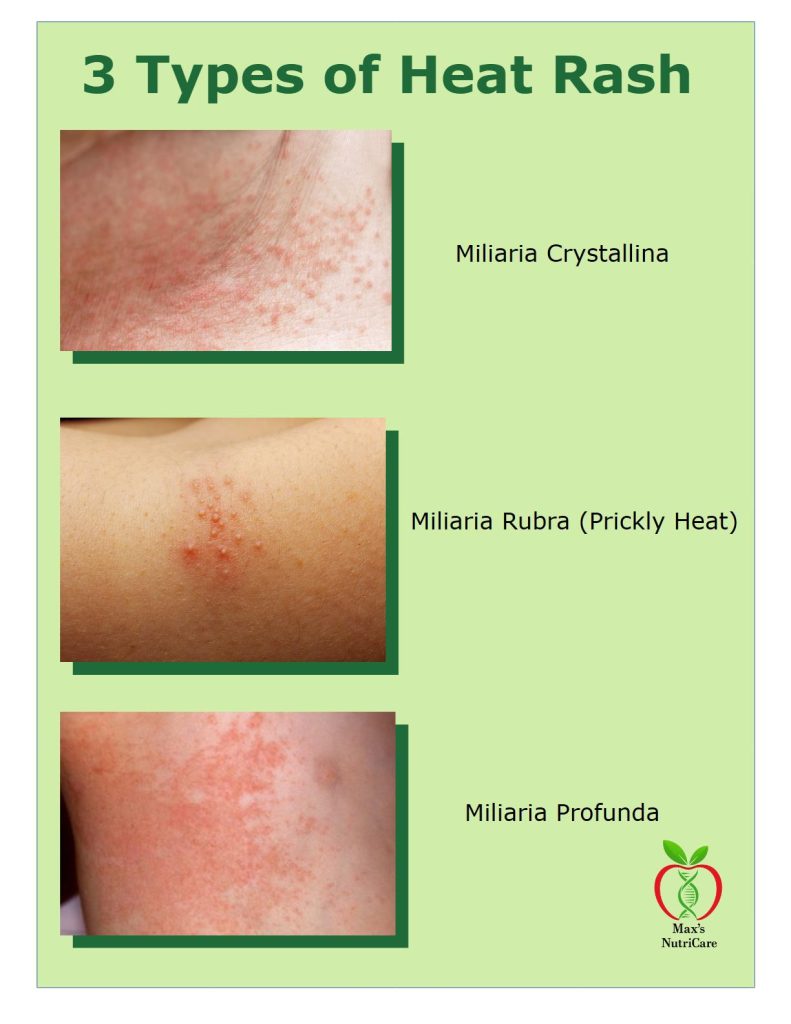
- Miliaria Crystallina: The mildest form, featuring small, clear blisters like dew drops on the skin’s surface. It’s often painless and resolves quickly with c
ooling. - Miliaria Rubra (Prickly Heat): The most common, with red bumps and intense itching or stinging. This occurs in the epidermis and can feel prickly due to inflammation.
- Miliaria Profunda: Deeper blockages lead to flesh-colored lumps, potentially causing heat intolerance as sweating is impaired.
Per the Mayo Clinic, these types stem from the same sweat-trapping mechanism but differ in severity. In menopause, rubra is prevalent due to frequent hot flashes. Nutritionally, focusing on anti-inflammatory foods can reduce the progression from mild to severe types.
Symptoms to Watch For
Symptoms of heat rash include small red bumps, clear blisters, itching, or a prickly sensation, often in sweat-prone areas like the neck, armpits, groin, or chest. In severe cases, pus-filled bumps or reduced sweating may occur, signaling deeper issues. For menopausal women, these can overlap with hot flash redness, making differentiation key—rashes from menopause are often dry and itchy due to estrogen decline.
Holistically, symptoms are signals of imbalance. If persistent, they might indicate underlying dehydration or nutritional gaps. Monitor for infection signs like fever, and consult a professional if needed.
Understanding Occlusive Creams and Their Impact
Occlusive creams, containing ingredients like petrolatum or dimethicone, create a barrier to lock in moisture—great for dry skin but problematic for heat rash. They seal the skin, trapping heat and sweat, which worsens duct blockages and inflammation. In humid weather or during menopausal sweats, this can turn a mild rash into a persistent one.
From my coaching experience, many women use heavy creams for menopause-related dryness, unknowingly aggravating rashes. Opt for lightweight, non-comedogenic alternatives. Holistically, avoid them in favor of natural hydrators like aloe vera, which cool without occlusion. Trusted Source.
Cooling Rituals for Natural Relief
Cooling rituals draw from ancient practices to restore balance and soothe heat rash without harsh interventions. These gentle methods align with your body’s natural rhythms, especially helpful during menopause when heat surges are common.
- Cool Baths with Herbal Infusions: Add chamomile or mint to lukewarm water for anti-inflammatory effects. This calms itching and opens pores.
- Cold Compresses: Use cucumber slices or aloe-infused cloths for 10-15 minutes to reduce redness.
- Breathable Environments: Wear loose cotton and use fans to promote airflow, preventing moisture buildup.
Incorporate mindfulness—deep breathing during rituals can ease menopausal stress, indirectly reducing hot flashes. Trusted Source.
Nutritional Support: The Cornerstone of Healing Heat Rash Holistically
As a nutritionist and menopause coach, I view nutrition as the most powerful tool for preventing and soothing heat rash (miliaria). During perimenopause and menopause, declining estrogen levels thin the skin, heighten inflammation, and intensify sweating from hot flashes—creating the perfect storm for blocked sweat ducts and prickly, itchy bumps. An anti-inflammatory, hydrating diet rebuilds the skin’s natural barrier, regulates sweat production, calms histamine responses, and supports detoxification pathways without fad “cleanses.” Historical observations from WWII troops in the Pacific and modern insights show that targeted nutrients like vitamin C can dramatically reduce prickly heat outbreaks, while omega-3s and antioxidants counteract menopausal inflammation.
Holistically, food is medicine: Focus on cooling, water-rich, antioxidant-packed whole foods to balance heat and nurture hormonal harmony. Aim for colorful plates with at least 8-10 servings of fruits/veggies daily, healthy fats, and mindful hydration—your skin will thank you.
Key Nutrients and Why They Help
- Vitamin C – The Prickly Heat Superstar: Acts as a natural antihistamine and anti-inflammatory, reducing itchiness, redness, and histamine-driven reactions. WWII studies and JAMA reports showed high-dose vitamin C (1-3g daily, split doses) prevented and relieved miliaria in hot climates by breaking down histamine and supporting collagen for stronger sweat ducts. For menopausal women, it also combats oxidative stress from hormonal shifts.
- Food sources: Bell peppers, strawberries, kiwi, broccoli, citrus (oranges, lemons), papaya.
- Tip: Start with 500-2000mg daily from food/supplements (consult your doctor for higher doses).
- Hydration & Electrolyte-Rich Foods: Dehydration thickens sweat, worsening duct blockages. Water-rich foods provide built-in hydration plus potassium/sodium to maintain fluid balance and efficient sweating—crucial during menopausal night sweats or hot flashes.
- Top picks: Watermelon, cucumbers, celery, oranges, coconut water (natural electrolytes), leafy greens.
- Bonus: Herbal infusions like peppermint or nettle tea act as gentle diuretics while cooling internally.
- Omega-3 Fatty Acids & Healthy Fats: Rebuild the skin’s lipid barrier (thinned by low estrogen), reduce inflammation, and prevent occlusion-like issues from within. Studies link omega-3s to better skin integrity and fewer inflammatory rashes in menopause.
- Sources: Wild salmon, sardines, walnuts, flaxseeds, chia seeds, avocados.
- Antioxidants (Vitamins A, E & Polyphenols): Protect against free radicals from heat/sun exposure, calm menopausal inflammation, and support repair. Vitamin E pairs beautifully with C for extra prevention.
- Sources: Berries (blueberries, strawberries), spinach, kale, sweet potatoes, almonds, turmeric (curcumin for potent anti-inflammatory effects).
- Zinc & Anti-Inflammatory Herbs: Zinc aids skin healing and reduces rash severity; herbs like turmeric and ginger cool systemic heat.
- Sources: Pumpkin seeds, lentils, ginger root, golden milk (turmeric + plant milk).
Menopause-Specific Considerations
Falling estrogen ramps up chronic low-grade inflammation, making rashes more frequent and stubborn. An anti-inflammatory Mediterranean-style diet (rich in the foods above) lowers cytokines and eases symptoms like hot flashes that trigger sweating. Phytoestrogen-rich foods (flaxseeds, soy if tolerated) gently mimic estrogen to support skin thickness.
Sample Day for Rash-Free Skin
- Breakfast: Berry-spinach smoothie with flaxseeds, kiwi, and almond milk.
- Snack: Cucumber slices with hummus or fresh orange.
- Lunch: Grilled salmon salad with bell peppers, greens, avocado, and lemon-tahini dressing.
- Afternoon: Nettle or peppermint tea + handful walnuts.
- Dinner: Turmeric veggie stir-fry with broccoli, sweet potato, and quinoa.
- Dessert: Frozen watermelon “pops” for cooling hydration.
In my coaching practice, clients who prioritize these foods see heat rash resolve faster and recur less—even through menopausal heat waves. Nutrition isn’t a quick fix but a sustainable foundation; combine with cooling rituals for best results. For personalized plans or supplement guidance (e.g., vitamin C dosing), book a session. Your body is wise—feed it cooling, vibrant fuel and watch your skin glow!
Conclusion
Heat rash may seem minor, but for menopausal women, it’s a reminder to nurture body balance. By understanding its causes, types, and symptoms, avoiding occlusive creams, embracing cooling rituals, and prioritizing nutrition, you can heal naturally and prevent flares. As your nutritionist and coach, I encourage a holistic lifestyle—hydrated, nourished, and mindful—to thrive through menopause. If symptoms persist, consult a healthcare provider. Stay cool and empowered!
