
(Part 1 of the Chia Seed Series)
Tiny. Speckled. Easy to overlook.
And yet, chia seeds have been quietly out-performing many modern “superfoods” for thousands of years.
Long before collagen powders, green juice cleanses, or protein bars with names you can’t pronounce, chia seeds fueled Aztec and Mayan warriors, sustained long journeys, and nourished entire communities. While conquistadors chased gold, the real treasure was already growing in the soil.
Today, these humble seeds are back — not as a fad, but as a science-backed, everyday nutritional powerhouse.
In this first blog of our chia seed series, we’ll explore what chia seeds are, where they come from, their nutritional value, evidence-based health benefits, and how to use them simply — Rainbow-Reset-style
What Are Chia Seeds and Where Do They Come From?
Chia seeds come from the Salvia hispanica plant, a member of the mint family native to central Mexico and Guatemala. These edible seeds are hydrophilic, meaning they absorb up to 12 times their weight in water, turning into a gel-like substance—perfect for puddings or thickening smoothies. Historically, chia dates back to 3500 B.C., where it was a staple in Aztec and Mayan diets. The word “chia” means “strength” in Mayan, and legend has it Aztec warriors consumed them for endurance during battles. After a period of obscurity following the Spanish conquest, chia made a comeback in the 20th century and is now commercially grown in Central and South America.
Imagine: While conquistadors were chasing gold, the real treasure was these unassuming seeds sustaining entire empires. Today, they’re a global sensation, blending ancient wisdom with modern nutrition science.
While empires fell and fashions changed, chia seeds just kept doing their thing — quietly, steadily, and without a marketing team.
Nutritional Value of Chia Seeds: Small Seed, Serious Nutrition
Chia seeds are nutrient-dense, meaning they deliver a high concentration of essential nutrients in a small serving.
 Nutrition Snapshot (2 tablespoons / 28g)
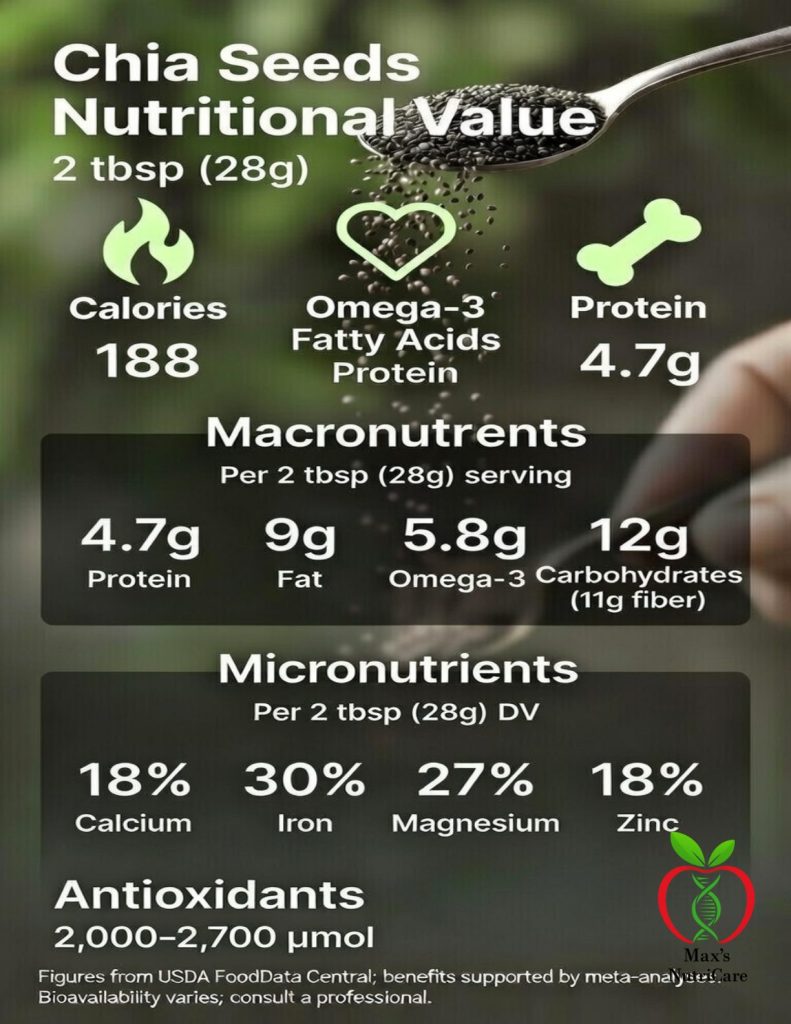 Nutrition Snapshot (2 tablespoons / 28g)
- Calories: ~138
- Protein: 4.7g (contains all 9 essential amino acids)
- Fat: 9g
- Including ~5.8g omega-3 (ALA)
- Carbohydrates: 12g
- Of which ~11g is fiber
- Calcium: ~179mg
- Iron: ~2.2mg
- Magnesium: ~95mg
- Zinc: ~1.3mg
- Antioxidants (ORAC): ~2,000–2,700 µmol TE
These figures highlight chia’s role as a plant-based source of complete protein (containing all nine essential amino acids), healthy fats, and fiber. The high fiber content is mostly soluble, forming that signature gel when soaked, which aids digestion. Plus, they’re loaded with antioxidants like chlorogenic acid and kaempferol, fighting oxidative stress. Bioavailability varies—plant-based minerals like calcium absorb at 20-30% compared to animal sources—but pairing with vitamin C or D can boost uptake.
Think of chia as nature’s multivitamin: Low in calories, high in essentials, and gluten-free, making them ideal for vegan, keto, or paleo diets.
Chia may be black or white, but it supports your body’s ability to use the nutrients from all the colours on your plate — red berries, green leaves, orange roots, purple skins, and beyond.
Evidence-Based Health Benefits of Chia Seeds
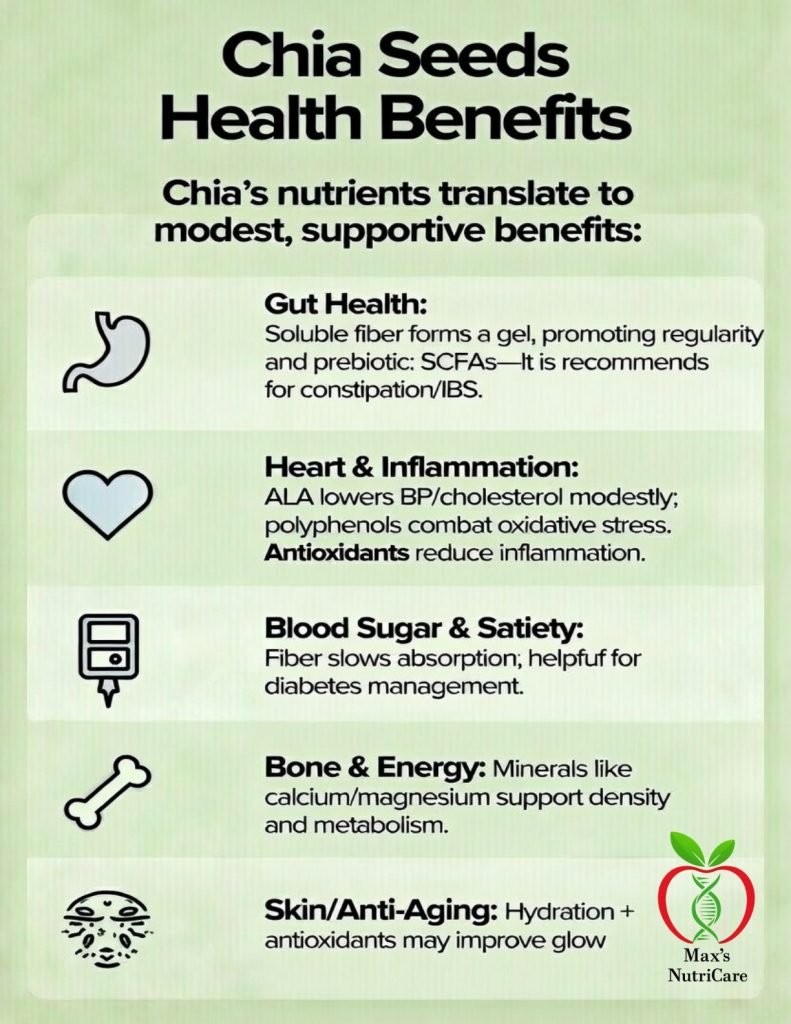
1. Gut Health and Digestion
Chia’s soluble fiber forms a gel that:
- Supports regular bowel movements
- Acts as a prebiotic, feeding beneficial gut bacteria
- Encourages production of short-chain fatty acids (SCFAs) linked to reduced inflammation
Think of it as hydration and nourishment for your gut lining — like steady rain soaking deep into dry soil.
2. Heart Health and Inflammation
Chia seeds are rich in alpha-linolenic acid (ALA), a plant-based omega-3.
Research links regular chia intake to:
- Reduced triglycerides
- Improved cholesterol balance
- Modest blood pressure support
- Reduced oxidative stress
For plant-based eaters, chia offers meaningful cardiovascular support when consumed consistently.
3. Blood Sugar Control and Fullness
- Soluble fiber slows digestion
- Helps reduce blood sugar spikes
- Promotes sustained fullness after meals
This makes chia especially useful for:
- Weight management
- Energy stability
- Reducing constant snacking
Chia doesn’t rush you — it helps you last.
4. Bone Health and Energy Support
Chia provides minerals essential for:
- Bone strength (calcium, magnesium, phosphorus)
- Muscle contraction
- Cellular energy production
Magnesium plays a key role in metabolic and nervous system balance — an often-overlooked nutrient in modern diets.
Nutrient Comparisons: How Chia Stacks Up
Per 100g (approximate values):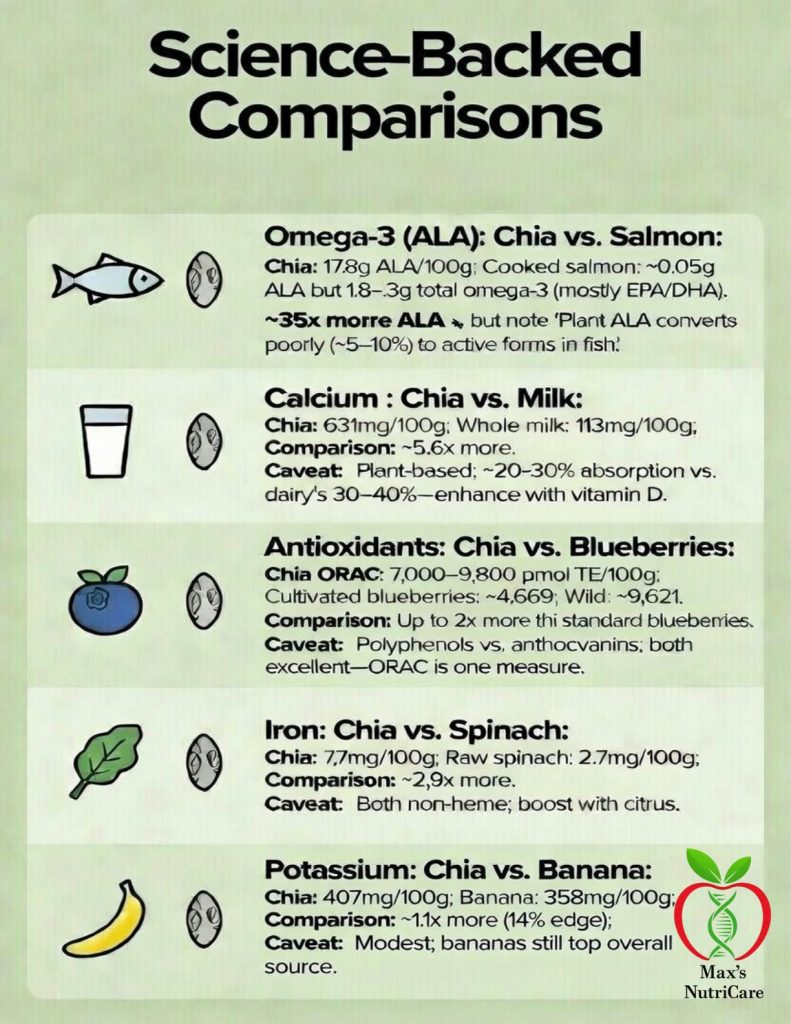
Omega-3 : Chia vs Salmon
- Chia: ~17.8g ALA
- Salmon: ~1.8–3g EPA/DHA
- Chia wins quantity; salmon wins conversion
- Chia: ~631mg
- Milk: ~113mg
- Plant absorption is lower — pair with vitamin D
- Chia: ~7,000–9,800 ORAC
- Blueberries: ~4,669 ORAC
- Chia: ~7.7mg
- Spinach: ~2.7mg
- Pair with vitamin C for absorption
- Chia: ~407mg
- Banana: ~358mg
Chia often outperforms — but diversity wins the long game
Is Chia Really a Superfood? A Balanced View
Why Chia Earns the Title
- Exceptionally nutrient-dense
- High fiber + omega-3 combination
- Affordable and accessible
- Easy to add to everyday meals
- Supports gut, heart, and metabolic health
Important Considerations
- ALA conversion to EPA/DHA is limited
- Excess intake may cause bloating
- May interact with blood-thinning medication
Bottom line:
Chia is powerful — but it works best as part of a diverse, colourful, whole-food diet
Simple Ways to Use Chia Seeds
Chia doesn’t need fancy recipes to be effective.
1. Chia Smoothie Boost
Add 1 tablespoon of chia seeds to any smoothie for extra fiber, omega-3s, and creaminess.
2. Overnight Chia Pudding
- 3–4 tbsp chia seeds
- 1 cup milk of choice
- Refrigerate overnight
Top with berries, nuts, or cinnamon.
3. Yoghurt Topping
Sprinkle soaked or dry chia over yoghurt with fruit for an easy, gut-friendly snack.
Tip: Start with 1–2 tablespoons per day and increase gradually.
For more Chia seed recipe comment “CHIA”
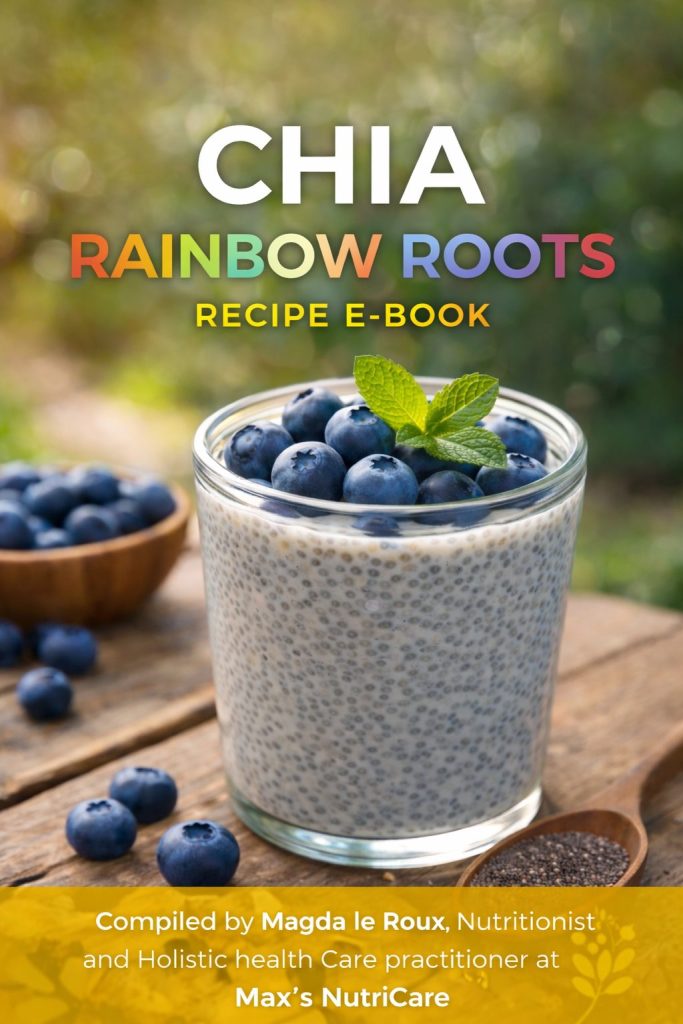
This Is Just the Beginning…
This blog is Part 1 of our 3-part chia seed series.
Coming up next:
Glow From Within: How Chia Seeds Support Skin Health
We’ll explore hydration, antioxidants, gut–skin connections, and why chia is quietly becoming a beauty-from-within staple.
Chia Seeds and Menopause: Hormones, Energy, and Gentle Balance
A deeper look at how chia supports blood sugar, bone health, inflammation, and energy during perimenopause and menopause.
