
Table of content
Definition
Types of hypertension
What does the numbers mean
What causes hypertension
Symptoms
Problems caused by hypertension
Treatment for hypertension
Food bad for hypertension
Food good for hypertension
Resources
1. Definition
High blood pressure is a common condition that affects the body’s arteries. Blood pressure is the pressure of blood pushing against the walls of your arteries. Arteries carry blood from your heart to other parts of your body. With high blood pressure, the force of the blood pushing against the artery walls is consistently too high. The heart has to work harder to pump blood.
Blood pressure is measured in millimeters of mercury (mm Hg). In general, hypertension is a blood pressure reading of 130/80 millimeters of mercury (mm Hg) or higher. It’s also called hypertension and The Silent Killer.
Your blood pressure normally rises and falls throughout the day. Hypertension can be identified as primary (without a known cause) or secondary (having an underlying condition as its cause).
It is a major cause of premature death worldwide, with upwards of 1 in 4 men and 1 in 5 women – over a billion people – having this condition
Types of hypertension
In 2017, the American College of Cardiology (ACC) and the American Heart Association (AHA) revised their hypertension guidelines. This changed the definition of high blood pressure.
Under the new guidelines, a blood pressure reading between 120 and 129 millimeters of mercury (mm Hg) for the top (systolic) number and more than 80 mm Hg for the bottom (diastolic) number is considered elevated. Additionally, any blood pressure reading above 130/80 mm Hg classifies as hypertension.
Normal blood pressure. Blood pressure is 120/80 mm Hg or lower.
Elevated blood pressure. The top number ranges from 120 to 129 mm Hg and the bottom number is below, not above, 80 mm Hg.
Stage 1 hypertension. The top number ranges from 130 to 139 mm Hg or the bottom number is between 80 and 89 mm Hg.
Stage 2 hypertension. The top number is 140 mm Hg or higher or the bottom number is 90 mm Hg or higher.
Blood pressure higher than 180/120 mm Hg is considered a hypertensive emergency or crisis. Seek emergency medical help for anyone with these blood pressure numbers.
Primary and secondary hypertension
There are two main types of hypertension: primary hypertension and secondary hypertension.
Primary hypertension
Primary hypertension is the most common type of hypertension. It is also referred to as essential hypertension. This type describes hypertension with no obvious cause.
The AHA suggests that a combination of genetics, age, and lifestyle factors cause primary hypertension. Lifestyle factors that may contribute include smoking, excessive alcohol consumption, and lack of exercise.
Making modifications to diet and lifestyle may help a person lower their blood pressure and reduce their risk of complications from hypertension.
Secondary hypertension
Secondary hypertension describes high blood pressure that has an identifiable cause or underlying condition.
According to the American Academy of Family Physicians (AAFP), around 5–10% of hypertension cases classify as secondary hypertension. This type tends to be more common in younger people.
Up to 30% of people ages 18–40 who have high blood pressure have secondary hypertension.
Some possible underlying causes of secondary hypertension include:
renal artery stenosis, or a narrowing of the arteries that supply blood to the kidneys
diseases of the adrenal glands, such as:
congenital heart defects, such as coarctation of the aorta
Clinicians further classify primary and secondary hypertension into the following sub-types:
Resistant hypertension
Resistant hypertension is hypertension that may not respond to treatment or requires multiple medications to control.
Doctors consider a person to have resistant hypertension when their blood pressure remains above target levels and they are taking three different blood pressure-lowering medications, such as a diuretic.
According to a 2015 review of studies, around 10% of people living with hypertension in Western cultures have the resistant type.
Isolated systolic hypertension
Isolated systolic hypertension is when a person’s systolic blood pressure rises above 140 mm Hg and their diastolic blood pressure drops below 90 mm Hg. Up to 15% of people age 60 years or older may be living with isolated systolic hypertension. Experts do not know the exact cause of isolated systolic hypertension. However, many believe it is due to stiffening of the artery walls as a result of aging. It is possible for younger people to develop isolated systolic hypertension. A 2016 study notes that isolated systolic hypertension occurs in 2–8% of younger people.
Malignant hypertension
Malignant hypertension refers to hypertension that damages a person’s organs. This is a medical emergency that requires immediate treatment. It is the most severe type of hypertension and a form of hypertensive emergency.
The main characteristics of malignant hypertension are:
systolic blood pressure at or over 180 mm Hg
diastolic blood pressure at or above 120 mm Hg
damage to multiple organs
Malignant hypertension is very uncommon, occurring in approximately 1–2 cases out of 100,000.
A hypertensive emergency refers to when a person’s blood pressure suddenly rises to 180/120 mm Hg or above. One example of a hypertensive emergency is malignant hypertension.
People should call for medical assistance immediately if they experience any of these symptoms:
changes in vision
difficulty speaking
Hypertensive emergency is a potentially life threatening condition. It can damage essential organs and cause severe complications, such as heart attack, stroke, and loss of kidney function.
Hypertensive urgency describes when a person’s blood pressure rises to 180/120 mm HG or more, but they do not have any of the other symptoms of hypertensive emergency.
Doctors typically treat hypertensive urgency by adjusting a person’s medications. However, a person should still seek immediate medical attention for hypertensive urgency to prevent it from becoming a hypertensive emergency.
What do blood pressure numbers mean?
Blood pressure is measured using two numbers:
Systolic Blood Pressure (the top number) indicates how much pressure your blood is exerting against your artery walls during heartbeats. measures the pressure in your arteries when your heart beats.
Diastolic Blood Pressure (the bottom number) indicates how much pressure your blood is exerting against your artery walls while the heart is resting between beats.
If the measurement reads 120 systolic and 80 diastolic, you would say, “120 over 80,” or write, “120/80 mmHg.”
Some health care professionals diagnose patients with high blood pressure if their blood pressure is consistently 140/90 mm Hg or higher.
Other health care professionals diagnose patients with high blood pressure if their blood pressure is consistently 130/80 mm Hg or higher. This limit is based on a guideline released in 2017.
What causes hypertension
Non-Modifiable Risk Factors
These factors are irreversible and cannot be changed. The more of these risk factors you have, the greater your chance of developing HBP.
Starting at age 18, ask your doctor for a blood pressure reading at least every two years. If you’re age 40 or older, or you’re 18 to 39 with a high risk of high blood pressure, ask your doctor for a blood pressure reading every year.
Family history/genetics may play a role in whether you are at higher risk.
African Americans and non-white Hispanic Americans are at higher risk for developing high blood pressure than any other group in the United States.
Modifiable Risk Factors: These factors can be modified, treated or controlled through medications or lifestyle changes.
Excessive alcohol consumption over many years.
Little to no physical activity.
Excessive amounts of salt in diet that exceed the recommended amounts of 1,500 to 2,300 mg of sodium per day.
Long history of smoking and/or drug abuse.
Extreme emotional stress.

Other conditions that contribute to developing high blood pressure:
Aldosteronism: A condition in which there is excessive secretion of aldosterone which disturbs the balance of sodium, potassium, and water in the blood leading to high blood pressure.
End-Stage Renal Disease: A condition in which your kidneys have stopped working well and your body retains fluid.
Thyroid Disease: A condition that is caused by the over or under function of the thyroid gland; the thyroid gland is an essential organ for producing thyroid hormones, which maintains the body’s metabolism.
Obstructive Sleep Apnea: A condition in which your breathing abruptly stops and starts while sleeping.
Medications: Certain medications such as cough, cold, inflammation and migraine/headache medications.
You are overweight or obese
Eat too much salt and not enough fruit and vegetables
Do not exercise
Drink too much alcohol or caffeine based drinks
Smoke
Are over 65
Are of black ethnic group
- Reactions to stress can effect Blood pressure
The body releases a surge of hormones when under stress. These hormones cause the heart to beat faster and the blood vessels to narrow. These actions increase blood pressure for a time. There’s no proof that stress by itself causes long-term high blood pressure. But reacting to stress in unhealthy ways can raise blood pressure and increase the risk of heart attack and stroke.
Inflammation:
When inflammation is responding to an injury or intruder – such as bacteria, viruses or a splinter – it’s acute. The immune system releases chemicals that cause small blood vessels to expand, allowing more blood to reach injured tissue. Chemicals released at the injured point attract immune system cells to the affected area, where they help with the healing process. If inflammation keeps simmering at a low level, it’s chronic. This can be triggered by cigarette smoke, obesity, chronic stress and more. Chronic inflammation has been linked to cancer, arthritis, diabetes and heart disease. With inflammation, your muscles ache and your joints ache. That’s because all the immune cells in your body are talking to each other saying, ‘Hey, there’s a foreign invader here. We’ve got to attack, and we’ve got to get rid of it.’ That’s a massive immunologic response, driven by things called cytokines. Cytokines are messages that immune cells use to speak to one another and coordinate an immune response.
Chronic inflammation leads to damage in the lining of the blood vessels, and that inflammatory response can lead to things like arterial stiffness, which generates higher and higher blood pressure.
Resveratrol is a plant compound in red wine (and grapes) that’s credited with anti-inflammatory effects. Just note that it’s easy to cross the line from beneficial to harmful. And when you cross that line, not only are the anti-inflammatory perks lost, but research published in the International Review of Neurobiology in 2022 shows that alcohol then triggers further inflammation in the body.
Though artificial sweeteners are all deemed relatively safe by the Food and Drug Administration, most of the ones you see on restaurant tables and in food products are sweet-tasting synthetic chemical compounds like aspartame and saccharine. And—particularly if there’s already some low-level inflammation—the body may consider these foreign bodies or irritants.
Symptoms
You can have high blood pressure for years without any symptoms.
A few people with high blood pressure may have:
Headaches
Nosebleeds
Shortness of breath
Blurry or double vision
Lightheartedness/fainting
Fatigue
Nausea and/or vomiting
However, these symptoms aren’t specific. They usually don’t occur until high blood pressure has reached a severe or life-threatening stage.
Problems caused by hypertension
Untreated, high blood pressure increases the risk of heart attack, stroke and other serious health problems. It can seriously hurt important organs like your heart, brain, kidneys, and eyes.
 Heart Attack and Heart Disease
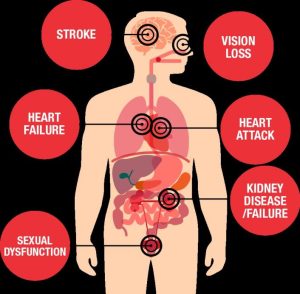 Heart Attack and Heart Disease
High blood pressure can damage your arteries by making them less elastic, which decreases the flow of blood and oxygen to your heart and leads to heart disease. In addition, decreased blood flow to the heart can cause:
Chest pain, also called angina. Angina — Over time, high blood pressure can lead to heart disease including microvascular disease (MVD). Angina, or chest pain, is a common symptom.
Heart attack, which happens when the blood supply to your heart is blocked and heart muscle begins to die without enough oxygen. The longer the blood flow is blocked, the greater the damage to the heart.
Heart failure, a condition that means your heart can’t pump enough blood and oxygen to your other organs.
Stroke and Brain Problems
High blood pressure can cause the arteries that supply blood and oxygen to the brain to burst or be blocked, causing a stroke. Brain cells die during a stroke because they do not get enough oxygen. Stroke can cause serious disabilities in speech, movement, and other basic activities. A stroke can also kill you.
Having high blood pressure, especially in midlife, is linked to having poorer cognitive function and dementia later in life.
Kidney Disease
Adults with diabetes, high blood pressure, or both have a higher risk of developing chronic kidney disease than those without these conditions. Glomerulonephritis can occur it is when damage to the tiny filters inside the kidneys narrowing of the arteries supplying the kidneys happens.
Cholesterol
Hypertension increases the workload of your heart and blood vessels. Over time, this workload leads to the damage of your artery walls. In turn, LDL (bad) cholesterol forms plaque along these damaged walls. Plaque build-up is a condition known as atherosclerosis. As plaque accumulates, the narrower the insides of the arteries become, leading to not only higher blood pressure, but signifies the beginning of a cycle that will further damage your heart and the rest of your body.
Vision loss
High blood pressure can strain or damage blood vessels in the eyes.
Sexual dysfunction
High blood pressure can lead to erectile dysfunction in men and may contribute to lower libido in women.
Peripheral artery disease (PAD) — Atherosclerosis caused by high blood pressure can lead to narrowed arteries in the legs, arms, stomach and head, causing pain or fatigue.
Hormone problems
Such as an under active thyroid, an overactive thyroid, Cushing’s syndrome, acromegaly, increased levels of the hormone aldosterone (hyperaldosteronism), and phaeochromocytoma
Lupus
A condition in which the immune system attacks parts of the body, such as the skin, joints and organs
Scleroderma
A condition that causes thickened skin, and sometimes problems with organs and blood vessels
Metabolic syndrome
Is a cluster of risk factors, including high blood pressure, that raises the risk of heart disease, diabetes, stroke and other health problems. It’s diagnosed when you have any three of these risk factors:
High blood glucose (sugar)
Low levels of HDL (good) cholesterol in the blood
High levels of triglycerides in the blood
Large waist circumference or “apple-shaped” body
High blood pressure
Medicines
Medicines that can increase your blood pressure include:
the contraceptive pill
steroids
non-steroidal anti-inflammatory drugs (NSAIDs) – such as ibuprofen, aspirin and naproxen
some pharmacy cough and cold remedies
some herbal remedies – particularly those containing licorice
some recreational drugs – such as cocaine and amphetamines
some selective serotonin-noradrenaline reuptake inhibitor (SSNRI) antidepressants – such as venlafaxine
In these cases, your blood pressure may return to normal once you stop taking the medicine or drug. Consult your medical practitioner
Treatment for Hypertension
Hypertension affects around 7.5% of people aged 18–39 years, 33.2% of people aged 40–59 years, and 63.1% of individuals over the age of 60 years.
Treatment for HBP depends on its severity and associated risks of developing other diseases. Treatment options include lifestyle changes and medications. Consult your medical practitioner
Lifestyle Changes
Avoid smoking.
Eat a heart-healthy diet, especially one that is low in salt.
Exercise under the directions of your doctor.
If you’re overweight, talk to your doctor about weight loss options.
Limiting alcohol consumption to 1 drink per day for women and 2 drinks per day for men
Manage stress.
Make and keep appointments to see your doctor for routine check-ups and follow-up tests.
Medications
This must be used in conjunction with your medical practitioner
ACE inhibitors will help blood vessels relax and open up, leading to a lower blood pressure.
Angiotensin II receptor blockers will help blood vessels open up, leading to a lower blood pressure.
Beta blockers will help reduce your blood pressure.
Alpha blockers will help reduce the arteries’ resistance, relaxing the muscle tone of the vascular walls.
Alpha-2 receptor agonists will help reduce blood pressure by decreasing the activity of the sympathetic portion of the involuntary nervous system.
Calcium channel blockers will help relax and open up narrowed blood vessels, reduce heart rate and lower blood pressure.
Combined alpha and beta blockers are used as an IV drip for those patients experiencing a hypertensive crisis.
Central agonists will help decrease the blood vessels’ ability to tense up or contract.
Diuretics “water pills” will help reduce the amount of fluid retention in your body. Be careful as dehydration can worsen your BP
Peripheral adrenergic inhibitors will help reduce blood pressure by blocking neurotransmitters in the brain.
Vasodilators will help the muscle in the walls of the blood vessels to relax, allowing the vessel to dilate.
Food that worsens hypertension
Salt or sodium
Salt, or specifically the sodium in salt, is a major contributor to high blood pressure and heart disease. This is because of how it affects fluid balance in the blood.
Table salt is around 40 percent sodium. Some amount of salt is important for health, but it’s easy to eat too much. The AHA recommends getting no more than 2,300 mg of sodium — the equivalent of 1 teaspoon of salt — each day.
Most of the sodium in the American diet comes from packaged, processed food rather than what you add at the table. Sodium may be hidden in unexpected places.
The following foods, known as the “salty six,” are major contributors to people’s daily salt intake:
breads and rolls
pizza
sandwiches
cold cuts and cured meats
soup
burritos and tacos
Deli meat
Processed deli and lunch meats are often packed with sodium. That’s because manufacturers cure, season, and preserve these meats with salt.
According to the U.S. Department of Agriculture (USDA) database, one frankfurter, or hot dog, contains 567 mgof sodium.
Adding other high salt foods, such as bread, cheese, various condiments, and pickles, means that a sandwich can easily become very high in sodium.
Frozen pizza
The combination of ingredients in frozen pizzas means they’re high in sugar, saturated fat, and sodium. Frozen pizza can have especially high levels of sodium.
Cheese is often high in sodium. Just two slices of cheese can contain up to 512 mg of sodium. This is generally in combination with a salty or sugary pizza dough and crust, cured meats, and tomato sauce.
To maintain flavor in the pizza once it’s been cooked, manufacturers often add a lot of salt.
One 12-inch pepperoni pizza, cooked from frozen, can contain 3,140 mg of sodium, which is well above the daily limit of 2,300 mg.
As a substitute, try making pizza at home, using homemade dough, low sodium cheese, and your favorite vegetables as toppings.
Pickles
Preserving any food requires salt. It stops the food from decaying and keeps it edible for longer.
The longer vegetables sit in canning and preserving liquids, the more sodium they pick up.
One small pickled cucumber contains 448 mg of sodium.
Canned soups
Canned soups are simple and easy to prepare, especially when you’re crunched for time or not feeling well.
However, canned soups are high in sodium. Canned and packaged broths and stocks may contain similar amounts. This means they can elevate your blood pressure.
One can of tomato soup can contain up to 1,110 mg of sodium, while a can of chicken and vegetable soup can contain up to 2,140 mg.
Try choosing low or reduced sodium soups instead, or make your own soup at home from fresh ingredients.
Canned tomato products
Most canned tomato sauces, pasta sauces, and tomato juices are high in sodium. This means they can raise your blood pressure, especially if you already have high blood pressure.
One serving (135 grams) of marinara sauce contains 566 mg of sodium, brand dependent. One cup of tomato juice contains 615 mg, brand dependent.
Sugar
Sugar can increase your blood pressure in several ways.
Research indicates that sugar — and especially sugar-sweetened drinks — contributes to weight gain in adults and children. Overweight and obesity increases the chance of having high blood pressure.
Added sugar may also have a direct effect on increasing blood pressure, though more research is needed.
One 2019 study in females with high blood pressure reported that decreasing sugar by 2.3 teaspoons could result in an 8.4 mm Hg drop in systolic and a 3.7 mm Hg drop in diastolic blood pressure.
The AHA recommends the following daily added sugar limits:
6 teaspoons, or 25 grams, for females
9 teaspoons, or 36 grams, for males
Processed foods with trans or saturated fat
To keep the heart healthy, it’s best to reduce saturated fats and avoid trans fats. This is especially true for people with high blood pressure.
Trans fats are artificial fats that increase packaged foods’ shelf life and stability.
However, eating them raises LDL (bad) cholesterol levels and lowers HDL (good) cholesterol levels, which can increase the risk of hypertension.
Saturated fats also increase the levels of LDL cholesterol in the blood.
Trans fats are especially harmful for your health and are linked to poor heart health, including an increased risk of:
heart disease
stroke
type 2 diabetes
Packaged, pre-prepared foods often contain trans fats and saturated fats, alongside high amounts of sugar, sodium, and low fiber carbohydrates.
Saturated fats are mostly found in animal products, including:
full fat milk and cream
butter
chicken skin
Reducing intake of both saturated and trans fats to help keep the heart healthy.
One way to reduce your saturated fat intake is to replace some animal foods with plant-based alternatives.
Many plant-based foods contain healthy monounsaturated and polyunsaturated fatty acids. Examples of plant-based foods include:
nuts
seeds
avocado
Alcohol
Drinking too much alcohol can increase your blood pressure.
Research from 2017 found a link between drinking less alcohol and lowering blood pressure among people who usually had more than two drinks each day.
Alcohol can also prevent blood pressure medications that you may be taking from working effectively through drug interactions.
In addition, many alcoholic drinks are high in sugar and calories. Drinking alcohol can contribute to overweight and obesity, which can increase the risk of hypertension.
Water
Some research suggests that dehydration could contribute to high blood pressure levels by impairing the function of the blood vessels. Therefore, staying hydrated by drinking plenty of water throughout the day could be beneficial.
Food that helps lowering hypertension
If you have high blood pressure, it is advises eating heart-heathy foods such as:
fruits
vegetables
lean protein
whole grains
fish and poultry
nuts and legumes
Research suggests that specific foods and minerals may also help with blood pressure.
For example, studies indicate that potassium reduces blood pressure in people with hypertension, because potassium offsets the effects of sodium.
Foods that contain nitrates can reduce blood pressure, too, including beets and pomegranate juice. When choosing canned or processed foods, opt for reduced sodium, no sodium, or no salt added options.
Cinnamon
Is an aromatic spice that comes from the inner bark of trees from the Cinnamomum genus.
People have used it for centuries in traditional medicine to treat heart conditions, including high blood pressure.
While it’s not fully understood how cinnamon lowers blood pressure, animal research suggests it can help dilate and relax the blood vessels.
Garlic
Is rich in many compounds, such as allicin, that may benefit your heart.
Beets
Beets and beet greens are a good source of nitrates, which help relax blood vessels and may improve blood pressure. They are also a high source of potasium, fiber, folate, manganese, vitamin C and iron—many of which have also been linked to lower blood pressure.
Artichokes,
Are high sources of potassium.
Potatoes
Potatoes are bursting with potassium. While all types of potatoes are potassium-rich, some studies have shown that the bright hue of purple potatoes may give them an advantage of promoting decreased artery stiffness, which helps reduce blood pressure. They contain anthocyanins, a powerful antioxidant that gives this type of potato its purple hue.
Red bell peppers and watermelon are high in lycopene.
Basil (Ocimum basilicum)
It is a flavorful herb that comes in various forms. It’s popular in alternative medicine because it’s rich in various powerful compounds.
Parsley (Petroselinum crispum)
It is a popular herb in American, European, and Middle Eastern cuisine. It’s native to the Mediterranean and has an impressive nutritional profile.
Parsley contains a variety of compounds, such as vitamin C and dietary carotenoids, that may reduce blood pressure.
In a cross-sectional study of 17,398 adults, researchers found that a high dose of carotenoids had a positive impact on blood pressure. Benefits were seen in adults who consumed 100ug/mg of carotenoids a day.
Animal studies have shown that parsley reduced both systolic and diastolic blood pressure by acting like a calcium channel blocker, a type of medication that helps relax and dilate blood vessels.
However, there’s limited human research on parsley and blood pressure. More research in this area is needed to better understand its effects.
Celery seeds (Apium graveolens)
It is a versatile spice that’s packed with various nutrients, such as:
Some research suggests celery seeds may help lower blood pressure.
Researchers have suggested that compounds in celery seed extract may help lower blood pressure by acting as a natural calcium channel blocker.
In addition, celery seed is a good source of dietary fiber, which has been linked to lower blood pressure.
Scientists need to conduct more human research in this area.
Thyme is a flavorful herb packed with numerous healthy compounds. Rosmarinic acid is one such compound.
Results from an animal study have shown that taking rosmarinic acid helped significantly reduce systolic blood pressure by inhibiting angiotensin-converting enzyme (ACE). ACE is a molecule that narrows blood vessels and raises blood pressure. Inhibiting it may lower blood pressure.
There’s limited human research on thyme and blood pressure.
It is incredibly versatile and a staple in alternative medicine.
People have used it for centuries to improve many aspects of heart health, including circulation, cholesterol levels, and blood pressure.
It is an aromatic spice with a slightly sweet, intense flavor. It’s packed with various antioxidants that may help lower blood pressure.
People have long used Chinese cat’s claw in traditional Chinese medicine to treat a variety of ailments, including high blood pressure.
Its scientific name is Uncaria rhynchophylla, and it’s also called Gou-Teng or Chotoko.
However, do not confuse it with cat’s claw (Uncaria tomentosa). Despite its similar name and appearance, this plant has a different origin and different chemical properties.
Chinese cat’s claw contains several compounds, such as hirsutine and rhynchophylline. These compounds may stimulate blood vessels to produce nitric oxide. Nitric oxide is a chemical compound that helps blood vessels relax and dilate.
Taking Chinese cat’s claw extract or its compounds may help reduce blood pressure and aid blood flow. However, human studies are still limited in this area.
Is a herb that grows in marshy areas in South Asia. Practitioners of Ayurvedic medicine use it to treat various ailments, including anxiety, memory issues, and high blood pressure.
In animal studies, Bacopa monnieri helped lower both systolic and diastolic blood pressure levels by stimulating blood vessels to release nitric oxide.
Dark chocolate
A Mendelian randomization study found that intake of dark chocolate was associated with a decreased risk for essential hypertension and possibly a reduced risk for blood clots.
Cocoa is rich in flavanols, so the higher the percentage of cocoa in your chocolate, the more health benefits are possible. Dark chocolate, consisting of 70-90% cocoa, is also a good source of fiber, iron, magnesium, phosphorus and zinc. It is important to note that to get the most benefits, you want to choose more natural forms of cocoa. It is also important to note that the higher the percentage of cocoa you have, the more caffeine it will contain
Tomatoes
Tomatoes contain lycopene, which helps keep blood vessel walls supple, as well as potassium that helps manage the effects of sodium and helps control fluid levels in the body. Lycopene, the most plentiful carotenoid in tomato, does not only reduce the angiotensin-converting enzyme and its gene expression, preventing the synthesis of angiotensin 2. It also promotes the generation of nitric oxide in the endothelium, cells that line the blood vessels, helping lower blood pressure and improving blood flow. Angiotensin 2 can narrow blood vessels, forcing the heart to work harder at pushing blood through. Blood pressure medicines that reduce the production of angiotensin-converting enzymes are referred to as ACE inhibitors.
Red tomatoes cooked for at least 20minutes have even more of the lycopene than raw tomatoes. Yellow tomatoes has the Lycopene form that is the easiest to be absorbed by the human body and so they can be eaten raw.
Green Leafy Vegetables
Kale, spinach, cabbage, collards and other leafy greens are rich in dietary nitrates, which serve as a vasodilator that widens the blood vessels and improves blood flow.
Winter Squash
There are lots of types to choose from including butternut squash and spaghetti squash. All have a vibrant yellow or orange hue and a starchy flesh that is packed with potassium. One cup of winter squash has about 8% DV of potassium, as well as other nutrients, like vitamin A, fiber and vitamin C.
Bananas
Are a good source of potassium, which has been shown to help manage hypertension and is recognized for its ability to reduce the effects of sodium in the body and to alleviate tension in the walls of the blood vessels
Avocados
Avo’s contain both dietary fiber and unsaturated fats, which have both been linked to cardiovascular health. And a diet rich in potassium helps to offset some of sodium’s harmful effects on blood pressure.
Kiwi
A good source of vitamin C, kiwis can help reduce blood pressure in those with primary hypertension. Recent research has found that a daily serving of kiwi can reduce systolic blood pressure. Kiwi also has potassium, which could factor into its effects.
Fibre
Eat more foods that is high in fibre. Researchers suspect that the beneficial effects of fiber on blood pressure are partially tied to benefits to your gut microbiome—the complex community of microorganisms like bacteria that live in your gut and have been shown to have a positive impact on overall health. The good bacteria in your gut break down dietary fiber and produce compounds called short-chain fatty acids that may, in turn, help lower blood pressure
Blueberries
Blueberries are rich in a specific group of flavonoids called anthocyanins. They’re actually what give the berries their deep blue pigment. (They’re found in red and purple plants, too.) Anthocyanins in blueberries can promote the production of nitrous oxide—a gas that helps blood vessels relax and remain flexible. And that improves blood flow and lowers blood pressure. A 2019 study in The American Journal of Clinical Nutrition found that participants who ate 1 cup of blueberries a day saw significant improvements in blood flow through their arteries.
Resources:
https://www.mayoclinic.org/diseases-conditions/high-blood-pressure/symptoms-causes/syc-20373410
https://www.cdc.gov/bloodpressure/about.htm#:~:text=high%20blood%20pressure.-,What%20causes%20high%20blood%20pressure%3F,for%20developing%20high%20blood%20pressure.
https://www.rwjbh.org/treatment-care/heart-and-vascular-care/diseases-conditions/high-blood-pressure/
https://www.heart.org/en/health-topics/high-blood-pressure/health-threats-from-high-blood-pressure#:~:text=Left%20undetected%20or%20uncontrolled%2C%20high,to%20become%20blocked%20or%20burst.
https://www.healthline.com/health/high-blood-pressure-hypertension/foods-to-avoid#foods-to-eat
https://www.medicalnewstoday.com/articles/types-of-hypertension#hypertensive-urgency
https://www.nhs.uk/conditions/high-blood-pressure-hypertension/causes/
https://www.who.int/health-topics/hypertension#tab=tab_1
https://www.healthline.com/health/high-blood-pressure-home-remedies?utm_source=ReadNext
https://www.healthline.com/nutrition/herbs-to-lower-blood-pressure
https://www.medicalnewstoday.com/articles/dark-chocolate-hypertension-blood-pressure-lowering-effect?utm_source=ReadNext
https://www.medicalnewstoday.com/articles/can-eating-more-tomatoes-daily-help-lower-high-blood-pressure?utm_source=ReadNext
https://www.eatingwell.com/best-fruits-for-lower-blood-pressure-according-to-cardiologist-8414521
https://www.medicalnewstoday.com/articles/medical-myths-all-about-hypertension?utm_source=ReadNext#3.-High-blood-pressure-is-inevitable-with-age
https://www.eatingwell.com/article/8051684/best-vegetables-for-better-blood-pressure-according-to-dietitian/
https://www.mayoclinic.org/diseases-conditions/high-blood-pressure/in-depth/stress-and-high-blood-pressure/art-20044190
https://www.eatingwell.com/article/8044829/inflammation-and-high-blood-pressure/#:~:text=Chronic%20inflammation%20leads%20to%20damage,link%20between%20inflammation%20and%20hypertension.
https://www.heart.org/en/news/2021/04/01/why-you-should-pay-attention-to-inflammation
