
Introduction
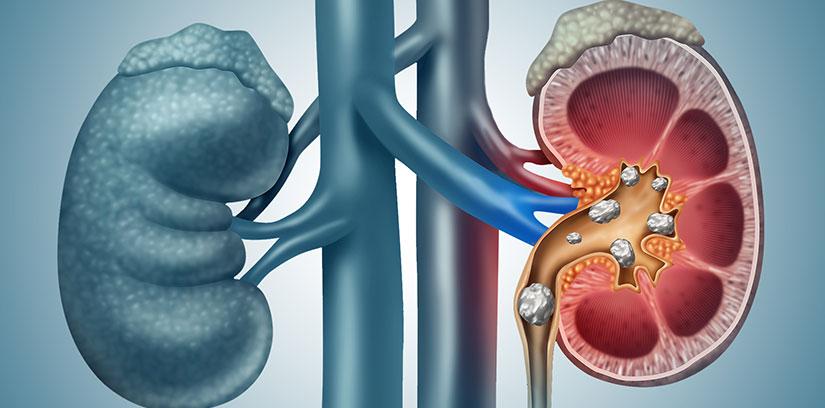
Kidney stones are among the most common urinary tract disorders, affecting millions of people worldwide. These hard, crystalline deposits form when minerals and salts concentrate in the urine, and their presence can cause severe pain and potentially long-term kidney damage if left untreated.
While genetics and medical conditions can play a role, nutrition, hydration, stress, and lifestyle are equally important in both prevention and treatment. The good news is that small but consistent dietary and lifestyle adjustments can significantly lower the risk of recurrence.
This blog provides an overview of the causes, symptoms, nutrition strategies, herbs, and holistic options available to support kidney health.
Causes and Risk Factors of Kidney Stones
Kidney stones develop when substances such as calcium, oxalate, uric acid, or cystine crystallize in the urine. Several factors increase this risk:
- Dehydration – Not drinking enough water concentrates minerals in urine, encouraging stone formation.
- Dietary Imbalances – Excess sodium, refined sugars, animal protein, or high-oxalate foods all contribute to risk.
- Medical Conditions – Gout, chronic kidney disease, urinary tract infections, or digestive conditions (e.g., Crohn’s, IBS) can increase risk.
- Genetic Predisposition – A family history of kidney stones raises the likelihood.
- Lifestyle Factors – Sedentary behavior, high stress, and obesity contribute to metabolic imbalances.
- Stress – Research links chronic stress to kidney stone formation by increasing cortisol levels, raising inflammation, and contributing to poor hydration habits.
Types of Kidney Stones
Kidney stones are not all the same, and understanding the type of stone is essential for effective treatment and prevention. The main types include:
- Calcium Oxalate Stones – The most common type, formed when calcium combines with oxalate in the urine. High oxalate foods (spinach, nuts, chocolate) and low fluid intake are key contributors.
- Calcium Phosphate Stones – Often linked to urinary tract infections and metabolic conditions that make the urine too alkaline.
- Uric Acid Stones – More common in people with high protein diets, gout, or dehydration. They develop when urine becomes too acidic.
- Struvite Stones – Usually the result of chronic urinary tract infections. These stones can grow quickly and become quite large.
- Cystine Stones – Rare and genetic, caused by a condition called cystinuria, where the kidneys excrete too much of the amino acid cystine.
Each stone type has different nutritional triggers and preventive strategies, making stone analysis an important part of creating a tailored treatment and dietary plan.
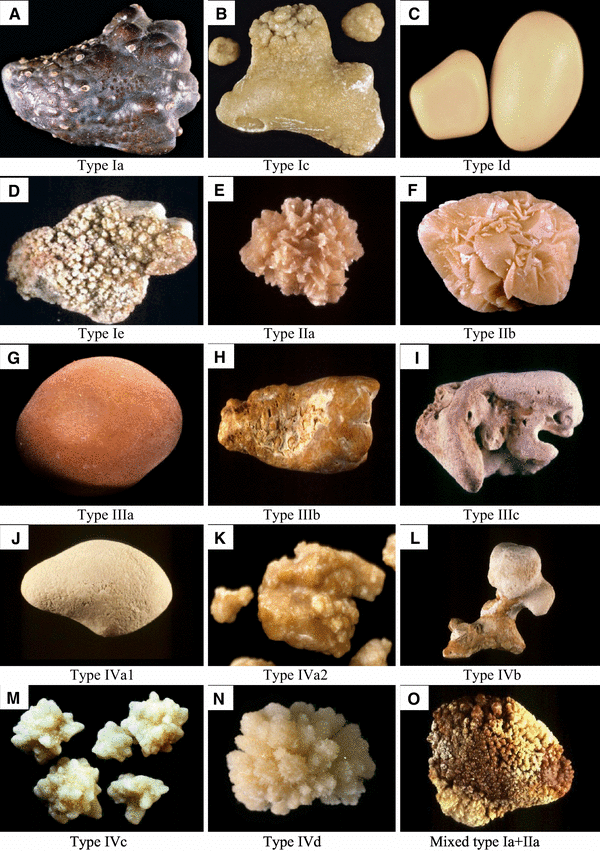
Photographs of the stone surface for the main morphological types of urinary calculi. Photographs a– d pure COM stones. Photograph e pure COD stone. Photograph f COD (75%) + COM (25%). Photographs g and h pure uric acid stones. Photograph i pure ammonium urate stone. Photograph j calcium phosphate stone made of a mixture of carbapatite (80%) and of amorphous carbonated calcium phosphate (20%). Photograph k nearly pure calcium phosphate stone: carbapatite (95%) + COD (5%). Photograph l carbapatite (50%) + struvite (40%) + amorphous carbonated calcium phosphate (10%). Photograph m struvite (90%) + carbapatite (10%). Photograph n brushite (90%) + COD (5%) + carbapatite (5%). Photograph o mixture of COM (70%) and COD (30%)
Symptoms of Kidney Stones
Kidney stones can be symptom-free until they begin to move within the kidney or urinary tract. Common signs include:
- Sudden, sharp pain in the back, side, or abdomen
- Pain that radiates to the groin or lower belly
- Blood in the urine (pink, red, or brown discoloration)
- Frequent urge to urinate with burning sensation
- Nausea, vomiting, cloudy or foul-smelling urine
- Fever and chills in cases of infection
- Severe cases may progress to kidney damage or failure if untreated

Foods to Eat for Kidney Stone Prevention
A kidney-supportive meal plan emphasizes hydration, low sodium, balanced minerals, and anti-inflammatory foods.
Hydration:
- Water is the most important tool. Aim for 2–3 liters daily.
- Coconut water naturally contains potassium and magnesium, which help reduce crystal formation.
- Lemon water increases citrate in urine, which prevents calcium stone development.
Fruits:
- Citrus fruits (lemons, limes, oranges, grapefruits) boost urinary citrate.
- Apples, pears, melons, and berries in moderation (cranberries especially for urinary health, but not in excess).
- Bananas and papayas in moderation for potassium balance.
Vegetables:
- Kidney-friendly low-oxalate vegetables: cucumber, cabbage, cauliflower, onion, lettuce, and zucchini.
- Cruciferous vegetables like broccoli and kale, rich in antioxidants.
Proteins:
- Lean poultry, fish, eggs (in moderation).
- Plant proteins: lentils, beans, and peas — but portion control is needed depending on stone type.
Healthy Fats & Extras:
- Olive oil and flaxseed oil support anti-inflammatory balance.
- Small amounts of avocado and nuts (unless oxalate restriction advised).
- Apple cider vinegar (diluted) may support kidney cleansing.
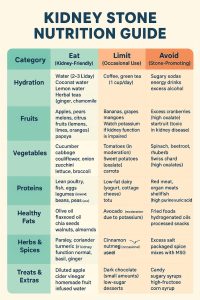
5. Foods to Avoid or Limit
Certain foods contribute directly to stone formation, depending on stone type:
- Oxalate-rich foods: Spinach, rhubarb, beets, soy products, nuts, dark chocolate — these increase calcium oxalate stones.
- High sodium foods: Processed foods, canned soups, salty snacks — excess sodium increases calcium excretion in urine.
- Excess animal protein: Red meat, organ meats, shellfish — these raise uric acid levels and risk of uric acid stones.
- Sugary foods/drinks: Soft drinks, high-fructose corn syrup, sweets — sugar raises calcium and oxalate levels in urine.
- Caffeine and alcohol (excess): Both dehydrate and alter mineral balance
Herbal & Natural Supports
Several herbs have been used traditionally to support kidney and urinary health:
- Coriander & parsley – Gentle natural diuretics, promoting urinary flow.
- Dandelion root – Supports kidney and liver detoxification.
- Nettle leaf – Provides minerals while supporting urinary tract health.
- Turmeric – Anti-inflammatory and antioxidant; safe only if kidney function is normal.
- Holy basil (tulsi) – Used in Ayurvedic medicine to reduce stone formation.
- Cranberry – Helps reduce urinary tract infections that can complicate stone risk (should be used moderately to avoid oxalate overload).
(Note: Herbs should be used as complementary care and under professional guidance, especially if on medication.)

Holistic Lifestyle Approaches
Nutrition is only part of the picture. Holistic prevention also involves lifestyle adjustments:
- Hydration routine – Drink small amounts of water throughout the day, not all at once.
- Citrate boost – Lemon water or citrus intake daily to prevent calcium stones.
- Stress management – Yoga, mindfulness, and breathing exercises reduce cortisol and support kidney function.
- Movement – Gentle daily exercise improves circulation and metabolism, lowering risk of recurrence.
- Weight management – Healthy body weight reduces metabolic strain on the kidneys.
- Medical monitoring – Regular urine and blood tests to check calcium, oxalate, and uric acid levels.
Conclusion
Kidney stones can be painful and disruptive, but they are largely preventable with the right balance of hydration, nutrition, and lifestyle. By emphasizing water intake, limiting stone-promoting foods, incorporating kidney-supportive herbs, and managing stress, individuals can not only treat but also reduce the risk of recurrence.
Long-term kidney health depends on consistent, mindful choices. A personalized nutrition plan tailored to stone type, medical history, and lifestyle provides the best foundation for both treatment and prevention.
Resources:
- https://www.mayoclinic.org/diseases-conditions/kidney-stones/symptoms-causes/syc-20355755
- https://medlineplus.gov/ency/patientinstructions/000135.htm
- https://www.niddk.nih.gov/health-information/urologic-diseases/kidney-stones/treatment#:~:text=Drinking%20liquids&text=Drinking%20enough%20liquids%20keeps%20your,also%20help%20prevent%20kidney%20stones.
- https://www.kidney.org/kidney-topics/kidney-stone-diet-plan-and-prevention#:~:text=Hydrate%20with%20water.,and%20individualized%20for%20each%20person.
- https://www.healthline.com/health/kidney-stone-diet#:~:text=drink%20at%20least%20twelve%20glasses,dehydrates%20you%2C%20such%20as%20alcohol.
- https://www.pristyncare.com/blog/foods-to-avoid-with-kidney-stones-pc0441/#:~:text=Avoid%20eating%20berries%20rich%20in,already%20suffering%20from%20kidney%20stones.
- https://www.relainstitute.com/articles/kidney-stone-diet-foods-to-eat-and-avoid/
- https://www.healthline.com/health/can-stress-cause-kidney-stones
- https://desertskyurology.com/blog/combating-kidney-stone-formation-in-high-stress-environments/#:~:text=Stress%20and%20Kidney%20Stones,contribute%20to%20kidney%20stone%20formation.
- https://academic.oup.com/ije/article-pdf/26/5/1017/18477379/261017.pdf
- https://www.medicalnewstoday.com/articles/318394#:~:text=Coconut%20water%20is%20a%20natural,support%20heart%20and%20kidney%20health.
- https://sahyadrihospital.com/blog/is-coconut-water-good-for-kidney-stones#:~:text=Coconut%20water%20contains%20natural%20potassium%20and%20magnesium,and%20prevent%20the%20formation%20of%20new%20ones.
- https://www.healthline.com/nutrition/is-cranberry-juice-good-for-kidney-stones
- https://www.lifelinescreening.com/health-education/diet-and-nutrition/cleaning-up-your-kidneys
- https://my.clevelandclinic.org/health/diseases/17689-kidney-failure#:~:text=Additional%20Common%20Questions-,Overview,swelling%20and%20peeing%20a%20lot.
- https://my.clevelandclinic.org/health/diseases/15096-chronic-kidney-disease
- https://healthmatch.io/kidney-disease/is-turmeric-bad-for-kidneys
- https://www.hopkinsmedicine.org/health/wellness-and-prevention/turmeric-benefits#:~:text=As%20wonderful%20as%20turmeric’s%20nutritional,this%20runs%20in%20your%20family.
- https://stvincents.org/about-us/news-press/news-detail?articleId=52051&publicid=395#:~:text=Here’s%20what%20the%20research%20says,heart%20disease%20and%20elevated%20cholesterol.%E2%80%9D
- https://midlanticurology.com/sugar-and-kidney-stones/#:~:text=Such%20added%20sugars%20can%20reduce,about%209%20teaspoons%20of%20sugar.
- https://kidneyhi.org/blog/apple-cider-vinegar-a-cure-all/
- https://www.cincinnatihomedialysis.com/blog/5-kidney-friendly-veggies-fruits-home-garden/#:~:text=Cucumber,as%20a%20kidney%2Dfriendly%20snack.
- https://www.medicinenet.com/what_foods_help_repair_kidneys/article.htm#:~:text=Potassium:%20In%20kidney%20disease%2C%20high,cabbage%2C%20cauliflower%2C%20and%20cucumber.
- https://atlanticurologyclinics.com/blog/are-beets-and-beet-juice-bad-for-your-kidneys/#:~:text=and%20beet%20juice.-,Potassium,consume%20regularly%20may%20be%20wise.
- https://www.medicalnewstoday.com/articles/288229#:~:text=Is%20there%20a%20downside%20to,may%20offer%20these%20same%20benefits.
- https://clevelandurology.net/posts/kidney-health/20-healthful-foods-for-fighting-kidney-disease/#:~:text=Onions%20are%20another%20perfect%20addition,recipe%20featuring%20these%20awesome%20veggies.
- https://www.hcgoncology.com/blog/kidney-diet-best-food-for-kidney-health/#:~:text=12.,inflammation%2C%20improving%20overall%20kidney%20health.
